AI in Workers' Comp: What We Covered at Elevate 2026
Takeaways from two Elevate 2026 panels: move past document summarization, define the problem before buying AI, and keep ownership of your data.
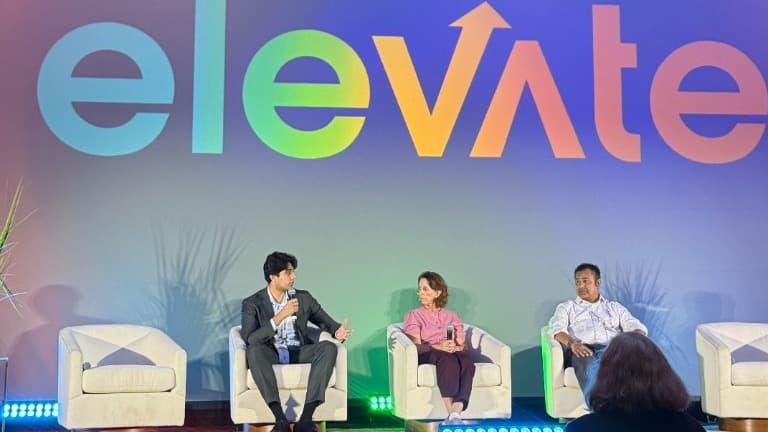
In case you missed it: I spoke on two AI panels at Elevate 2026 at the Hotel del Coronado. The first, "AI in Workers' Comp: From Hype to Measurable Impact," was moderated by Raja Sundaram of Plethy, with Gia Sawko of Signal Mutual. The second, "AI Governance: Guardrails That Leaders Must Own," was with Shari Starkey of CorVel and Thomas Ash of Consortium Solutions. Here is what I talked about and why I think it matters.
Where AI is creating value
Most of the conversation about AI in workers' comp is about document summarization. It's familiar, it's relatively low-risk, and it's useful. But it's a small part of what AI can do.
The bigger opportunity is automating entire workflows end to end. AI agents can handle longer-running, repetitive work across parties and channels: phone, email, fax, documents. They can manage chains of follow-ups, analyze what comes in, and work inside the claims systems teams already use. That gives adjusters time back for work that needs judgment.
What that looks like depends on who you are:
- For a provider, it's surfacing the context of the work they've already done, so they aren't rebuilding it from scratch on every evaluation.
- For a carrier or TPA, it's surfacing how similar claims were successfully handled in the past. Organizations that have managed claims for decades have a lot of institutional knowledge. No two claims are identical, but AI can compare an open claim against similar ones to anticipate what will be needed next. That's how claims management goes from reactive to proactive.
What separates successful AI implementations
It starts with defining the problem. A lot of organizations treat AI like a black box. They know they want it but haven't decided what it's supposed to fix. If it's not solving a defined problem, you're spending money and getting no return.
Start with one workflow. Pick one, prove the value, then expand. Trying to roll AI out everywhere at once is how projects stall.
Don't assume building is the answer. Many organizations spend a lot of time building AI in-house without the expertise to do it or the ability to hire the right people. Sometimes an existing solution solves the problem faster and for less.
Key takeaways
- Define the problem.
- Work with everyone across the organization. Leadership doesn't always see the day-to-day pain. If the people doing the work aren't part of choosing and rolling out the tool, they won't use it.
- Establish clear success metrics, and set them before you start.
AI governance: staying in control
The second panel took on what happens as AI does more of the work.
Shari talked about what tomorrow's adjuster looks like: judgment over generation, curiosity over clerical work, and critical thinking over task completion. AI can draft the email and summarize the record. The adjuster's value is deciding what's actually right.
Tom asked whether "AI" even exists, or whether it's mostly cheap arithmetic that we can govern like any other tool. He gave the room four questions for any vendor: ask for the follow-up study, not the pilot. Make them name the machine. Ask "per what?" And get the failure mode in writing.
My part was about ownership and control. Organizations need to decide what they actually need to build and own versus what an outside vendor can provide. You don't need to build every AI application yourself or replace your claims system to use AI. A vendor can deploy on top of your existing infrastructure. But buying AI shouldn't mean outsourcing your institutional knowledge. You should keep ownership of your data and systems of record, and control how that data is used, what the AI is allowed to do, and the rules it operates under.
Why this matters
Almost every organization I talk to says they're already working on something with AI. Usually that means individual people using general-purpose tools, or AI features built into the claim system. That's a start, but it's mostly task-level help, and without a defined problem and a metric, it's hard to say if it's working.
Claims teams are being asked to do more with fewer experienced people. Saving a few minutes on a summary doesn't change that. Taking whole workflows off the desk does, as long as the organization stays in control of its data and the people doing the work are part of the process.
Thank you to the Elevate team, the Education Committee, and my fellow panelists. If you're trying to figure out where AI fits in your claims or med-legal workflow, book a time with me.